our process


Using our I.M.P.A.C.T. Model
We support our partners to help break down entrenched policy silos and solve big public problems.
The Possibility Lab’s IMPACT Model provides a step-by step, iterative process to guide government agencies who want to work hand-in-hand with communities to address pressing social issues. We are eager to take on projects that will have visible, tangible effects on people’s lives!
see our i.m.p.a.c.t. model in action
Our Process Starts with Community Goals & Ends with Meaningful Change
01
We start with our partners' goals and objectives, because we know they are the real experts on what they do and what problem they want to address.
It is important that our government partners have a clear plan for how they will incorporate their community’s perspectives and ideas.
02
Throughout each project, we make sure we are asking the right questions and collecting the right data to evaluate both short- and long-term success.
But it stop there!
can't
We work with our partners to make use of the knowledge they have gained from communities, so that input leads directly to action.

We also help our partners use all the available tools—from data visualization to multimedia and narrative—to disseminate what we’ve learned. Through data-driven accountability and transparency, we are rebuilding trust between government agencies and the communities they serve.
Check Out Our ProjectsOur Core Values
We believe data should drive decision making, that communities should have a say in the decisions that affect them, and that bold ideas are out there that have the potential to advance systemic change but have not yet been attempted or accomplished at scale.

01
Policies are smarter and work better when stakeholders are actively involved in their design, implementation, and evaluation.
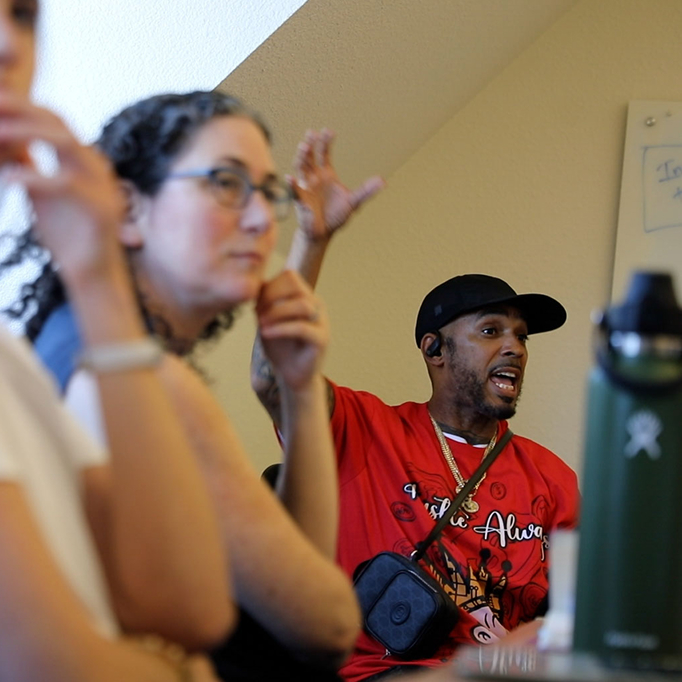
For too long, communities that are most directly harmed by broken systems, as well as young people who will most directly inherit the future we are creating, have been left out of the conversation about how to make change. Our work has shown that the quality of problem-solving improves when those who are personally affected by social problems are given a seat at the table.
02
Data can and should guide decision-making, and supersede political divides.
The political moment is rife with impassioned ideological arguments about whether new public policies can produce a brighter future. But history shows us countless examples of seemingly good ideas, proposed from both sides of the aisle, that did not achieve their goals—or worse, had unintended consequences that inadvertently caused harm. We need decisions that are evidence based, and data that are accurate, timely, and accessible to all.

03
The public sector can be a critical site of innovation, given the scale of resources it can mobilize and its mandate to serve the public good.
On the front lines of tackling public-sector problems, government workers have an optimal vantage point to both identify pain points and source potential solutions alongside the communities they serve.
Stay up to date with us.
Sign up for our newsletter—no spam, no nonsense.